Your fuel system does its job quietly for thousands of miles — until it doesn't. By the time most drivers notice a problem, deposits have usually been building for months. Here are the seven most common warning signs that your fuel system needs attention, and what's typically causing them.
1. Rough or Uneven Idling
If your engine shakes, sputters, or hunts for RPM while sitting at a stoplight, fuel delivery is a prime suspect. Dirty injectors or a fouled fuel system can disrupt the precise spray pattern your engine needs for smooth combustion at idle.
2. Hesitation on Acceleration
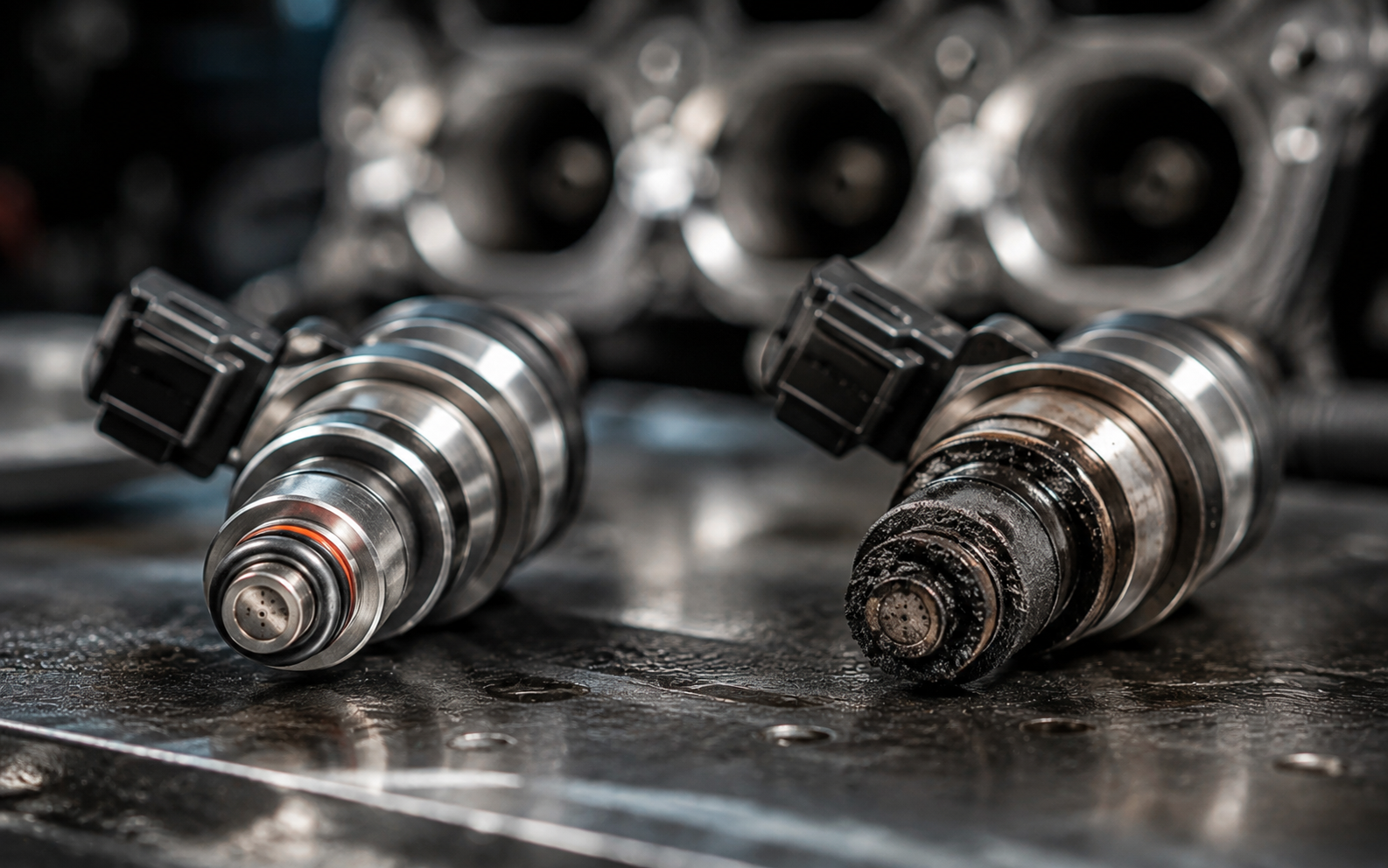
A slight delay or stumble when you press the gas — especially from a stop — often points to restricted fuel flow. Deposits inside injectors and along fuel system components can narrow the passages fuel needs to move through quickly.
3. Declining Fuel Economy
A gradual drop in MPG is one of the most common — and most ignored — signs of fuel system wear. When injectors don't atomize fuel properly, combustion becomes less efficient, and your engine has to burn more fuel to do the same work.
4. Engine Knocking or Pinging
Uneven fuel delivery can create hot spots and irregular combustion, which shows up as a knocking or pinging sound under load. It's a sign your engine isn't burning fuel the way it was designed to.
5. Trouble Starting
If your engine cranks longer than it used to before catching, or struggles more in cold weather, fuel delivery is worth checking. A fuel system that's not delivering a clean, consistent spray makes it harder for the engine to get the air-fuel mix it needs at startup.
6. Failed or Borderline Emissions Test
Incomplete combustion from a dirty fuel system sends more unburned hydrocarbons out the exhaust. If you're borderline on an emissions test, fuel system condition is one of the first places a technician will look.
7. A Noticeable Loss of Power
If your vehicle feels sluggish going up hills or merging onto the highway, and you haven't changed your driving, restricted fuel flow could be limiting how much fuel actually reaches the combustion chamber when you need it most.
Frequently Asked Questions
Keep Your Fuel System Clean Between Services
The best way to avoid fuel system problems is through regular maintenance. Using quality fuel, replacing your fuel filter when your vehicle manufacturer recommends it, and keeping up with routine maintenance can help reduce the buildup of deposits over time. Many drivers also choose to use a quality fuel system cleaner periodically to help keep injectors and other fuel system components clean. Catching small issues early is almost always less expensive than waiting until performance begins to suffer or repairs become necessary.
See Fuel Factor X ProductsConclusion
Your fuel system plays a vital role in your vehicle's performance, fuel economy, and reliability. If you've noticed rough idling, slower acceleration, lower gas mileage, or any of the other warning signs above, don't ignore them. While one symptom alone doesn't always indicate a serious problem, several occurring together may mean your fuel system needs attention. Staying on top of routine maintenance and addressing problems early can help your engine run more efficiently and may help you avoid more costly repairs down the road.