A lot of fuel additives make big claims. We dug into the independent lab tests, EPA registration, government research, and real fleet data to give you a straight answer.
Most fuel additives rely on marketing claims and nothing else. Fuel Factor X is different โ it has been tested by independent labs, registered with the EPA, and deployed in commercial fleets for over three decades. The results are documented and repeatable.
FFX works because of a patented organo-metallic combustion catalyst โ a burn-rate modifier that lowers the ignition point of fuel by approximately 400ยฐF. This means combustion starts earlier, lasts longer, and burns more of the available fuel energy before it exits as waste.
The result is a measurable improvement in fuel economy, reduced emissions, and less carbon buildup in the engine over time. These aren't claims โ they're the output of rigid third-party testing protocols used by government agencies and independent labs.
Under the SAE J1321 Fuel Consumption Test โ conducted by an independent lab at ยฑ1% accuracy โ Fuel Factor X achieved an 8.2% fuel economy improvement. That test is the same protocol used by the American Trucking Association.
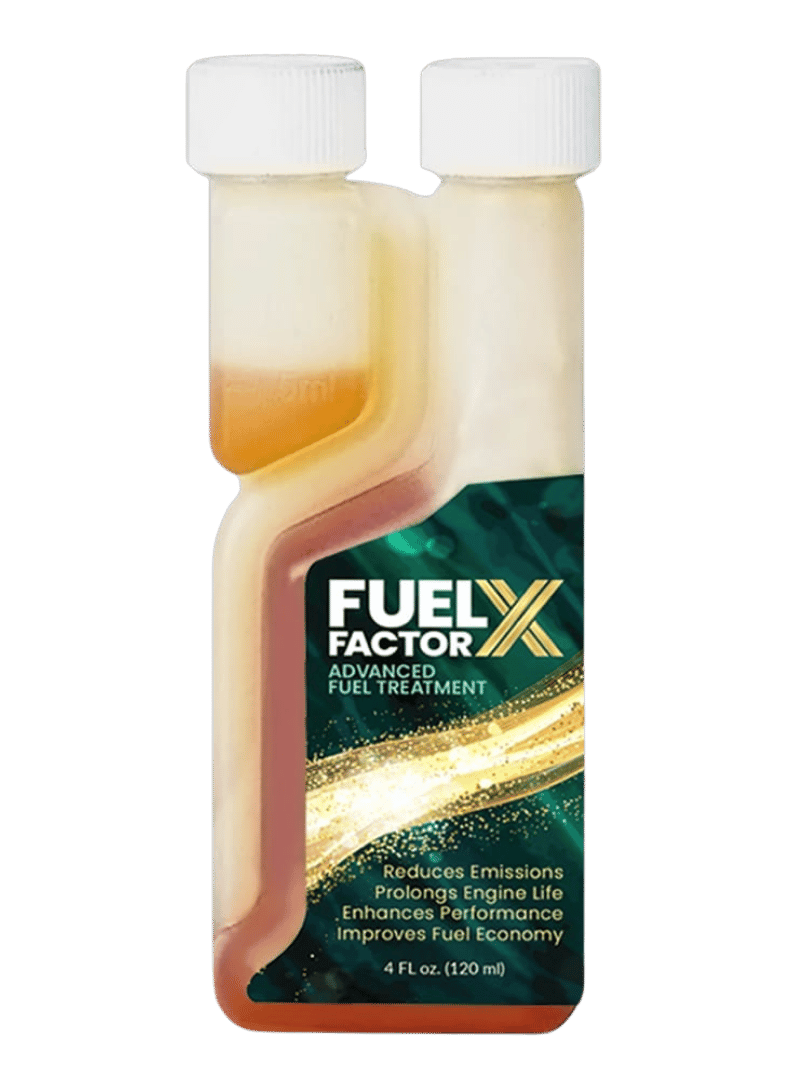
Understanding why FFX works means understanding what normally happens inside a combustion engine โ and where fuel energy gets wasted.
FFX contains an oil-soluble organo-metallic compound that acts as a burn-rate modifier. It reduces the temperature needed to ignite fuel from around 1,200ยฐF down to 800ยฐF โ giving combustion more time to occur and more fuel to burn before the exhaust valve opens.
FFX reduces the size of fuel droplets injected into the combustion chamber. Smaller droplets mean more surface area, more contact with oxygen, and a faster, more complete reaction. This directly increases the rate and completeness of combustion.
The active ingredient in FFX prevents soot particles from adhering to engine surfaces. It oxidizes the inner core of soot particles before they fully form โ which is why long-term FFX users see less carbon buildup and cleaner injectors over time.
Beyond combustion, FFX includes detergents that clean injectors and fuel lines, a synthetic lubricity agent that protects fuel-system components, a demulsifier that removes water from fuel, and a corrosion inhibitor that defends the tank and system long-term.
These results come from independent labs, government agencies, and third-party fleet operators โ not from the manufacturer.
Fuel Factor X holds EPA registration #217020001 under CFR 79.23 โ a three-phase evaluation process. Additionally, all product components comply with the U.S. Toxic Substances Control Act (TSCA) inventory listing requirements.
Here are the most common objections people have about fuel treatments โ and what the documented evidence actually says.
While FFX works in any gas or diesel combustion engine, certain situations see the biggest measurable gains.
The more you drive, the more fuel you buy โ and the more FFX saves you. Fleet operators saw $2.4M+ in annual net savings at scale.
Modern ultra-low sulfur diesel (ULSD) has reduced natural lubricity. FFX's synthetic lubricity agent directly addresses this known industry problem.
Engines with existing carbon buildup, deposit-clogged injectors, or reduced performance respond strongly to FFX's cleaning and catalyst components.
Fleet drivers reported easier cold starts compared to untreated vehicles in the same harsh conditions โ a direct result of FFX's cetane-improving properties.
Boats, RVs, and stored vehicles benefit from FFX's fuel stabilizer component, which keeps stored fuel fresher and more reliable between uses.
Independent tests show up to 25% reduction in smoke particulate and significant reductions in CO, NOX, and total hydrocarbons.
Fuel Factor X has 30+ years of real-world results, independent lab testing, and EPA registration behind it. The only question left is whether you want more from every tank.