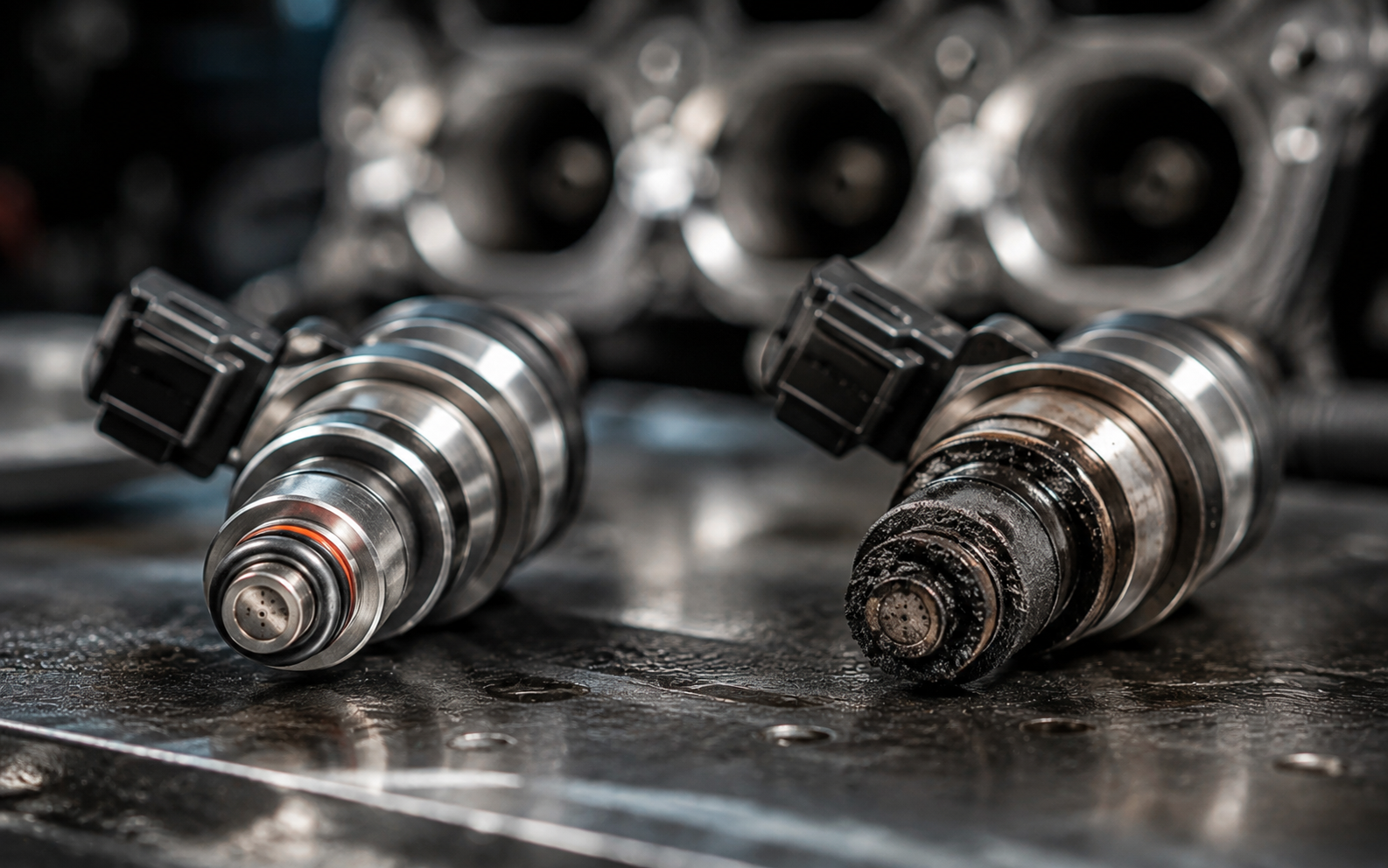
Fuel injectors are one of the most important components in your vehicle's fuel system. Their job is to deliver the precise amount of fuel your engine needs for smooth performance, strong acceleration, and good fuel economy. Although they're designed to last for many years, heat and fuel deposits can gradually affect how well they work. Understanding how fuel injectors operate makes it easier to recognize why keeping them clean is an important part of vehicle maintenance.
What a Fuel Injector Actually Does
A fuel injector is a small, precisely engineered valve that sprays a fine mist of fuel directly into the engine's intake or combustion chamber. Your engine's computer opens and closes each injector electronically, timing each spray down to fractions of a second so it lines up perfectly with the engine's intake stroke.
An Incredible Amount of Work
At highway speed, a typical fuel injector can fire thousands of times per minute. Each firing has to deliver an exact, tiny amount of fuel, atomized into a fine spray, so it mixes evenly with air for clean combustion. Over the life of a vehicle, injectors perform this cycle hundreds of millions of times.
Signs Your Fuel Injectors May Be Dirty
As deposits build inside the injectors, your vehicle may begin showing subtle performance changes. Common symptoms include:
- Rough or uneven idling
- Slower acceleration
- Reduced fuel economy
- Engine hesitation
- Hard starting
- Loss of power under load
These symptoms can also have other causes, but dirty fuel injectors are one possible reason they occur.
Why Deposits Build Up
Modern fuels contain compounds that, over time and heat exposure, can leave behind sticky residue on and inside the injector tip. This buildup happens gradually:
- Heat soak — When you shut off a hot engine, residual fuel in the injector tip can bake into a varnish-like coating.
- Fuel quality — Fuel composition varies station to station, and lower-quality fuel tends to leave more deposits behind.
- Short trips — Frequent short drives don't let the engine run long enough to burn off buildup the way sustained highway driving can.
- Stop-and-go driving — More starts, stops, and idling means more heat cycles, which accelerates deposit formation.
What Happens When Injectors Get Dirty
Deposits change the shape of the injector's spray pattern. Instead of a fine, even mist, fuel can come out in uneven streams or larger droplets that don't burn as completely. Because modern engines rely on precise fuel delivery, even small changes in the spray pattern can reduce combustion efficiency. Over time, this may lead to reduced engine performance, increased fuel consumption, and higher exhaust emissions.
How to Help Keep Fuel Injectors Clean
Most fuel injectors don't require frequent repairs, but routine maintenance can help reduce deposit buildup over time. Using quality gasoline, following your vehicle manufacturer's maintenance schedule, avoiding excessive short-trip driving when possible, and periodically using a quality fuel system cleaner may help keep injectors operating efficiently.
Fuel Factor X Helps Keep Injectors Clean From the Inside
Fuel Factor X is a concentrated fuel treatment designed to help clean and protect injectors as you drive — supported by SAE J1321 certified testing and over 30 years of commercial fleet use.
See Fuel Factor X ProductsConclusion
Fuel injectors are small components with a big responsibility. Every second your engine is running, they deliver precisely measured amounts of fuel to keep the engine operating smoothly and efficiently. While deposits naturally build over time, understanding what causes them and following good maintenance practices can help your fuel system continue performing at its best for many miles.
Bottom Line
Fuel injectors are precision components performing an incredible amount of work under demanding conditions. Understanding how they function — and what causes deposits to build — helps explain why keeping your fuel system clean can support smoother performance, better fuel economy, and long-term engine reliability.